
- Contact & Inquiry |
- 00852-69498254 |
- English
- pусский
- Deutsch
- English
- 中文(简体)
- 中文(繁体)
- 日本語
516
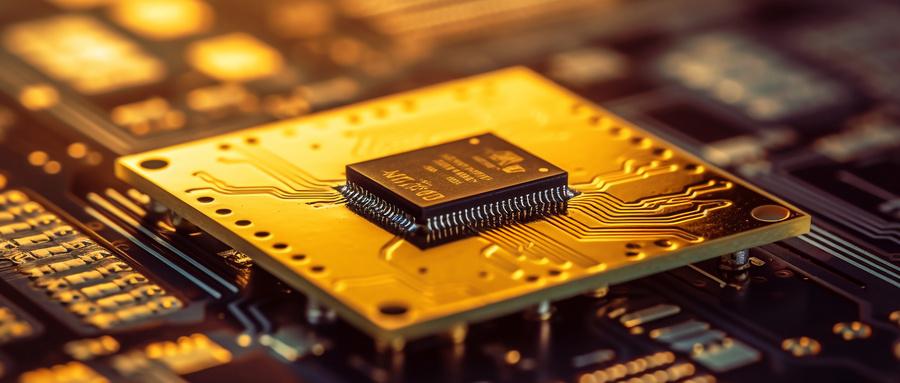
Gold prices continue to rise, and the trend continues to this day. On April 21-22, 2025, the international spot gold price soared to a record high of $3,400-3,500 per ounce. This not only sent shockwaves through the financial markets, but also spilled over into the semiconductor manufacturing industry. Recently, it was reported that the field of panel driver IC has begun to be affected, and the price increase of gold has greatly increased the cost of the gold bumping packaging process, and relevant packaging and testing manufacturers have started to increase prices.
Gold bump technology refers to the production of micro gold bumps on the chip pad to achieve a precise connection between the chip and the substrate to replace the traditional wire bonding method. The gold bump process is the mainstream packaging process for display panel driver chips such as LCD and AMOLED. In addition, the gold bump process is also used for the packaging of some sensors, electronic tags and other products. Gold is an important raw material for semiconductor manufacturing due to its high electrical conductivity, high ductility and high stability. Statistics point out that gold accounts for more than 70% of the cost of gold bump materials, and the soaring gold price can imagine the cost of this process.
As important companies in the global drive IC packaging and testing, Qibang Technology and Nanmao Technology will have a year-on-year decline of more than 4 percentage points in gross profit margin due to the surge in gold costs in 2024. Gold prices have been rising, and two packaging and testing companies have recently announced an increase in packaging and testing quotations, becoming the first case of the semiconductor industry raising quotations in this round of gold price rises. The price increase may have a chain reaction on the entire industrial chain, and the costs of downstream panel manufacturers and electronic equipment manufacturers will rise, which may affect the market price and competitiveness of products.
In addition to the gold bump process, gold plays an important role in many semiconductor processes, including bond wires, masks, etc. With the continuous upgrading of AI chips, automotive chips, and advanced manufacturing processes, the role of gold in chip manufacturing will only increase, not decrease. The specific applications of gold in chip manufacturing are as follows:
Bonding wires: Gold is extremely malleable and can be drawn into very fine wires, usually about 20-25 microns in diameter, these gold wires are used to connect the pads on the chip and the pins on the package shell during the chip packaging process, and establish the electrical connection channel between the chip and the external circuit, so as to achieve efficient signal transmission and ensure that the function of the chip can be played normally. In processors, SoCs, automotive chips, high-frequency RF devices, and aerospace chips, gold bonding wires are the only choice, and silver and copper materials cannot meet the demanding performance and reliability requirements.
Gold coating and gold plating: In chip manufacturing, gold coating or gold plating is often used to improve the performance and reliability of the chip. For example, gold plating on the solder joints, lead frames, and some critical metal layers of the chip can prevent metal oxidation and corrosion, prolong the life of the chip, and at the same time reduce the contact resistance, improve conductivity and signal transmission efficiency, and also help improve the heat dissipation performance of the chip.
Chip packaging: Gold is also used in a variety of applications in chip packaging, such as electroplating gold on the package substrate to ensure a low-loss connection between the chip and external circuitry, improving the electrical performance and reliability of the package. In addition, in some high-end chip packaging technologies, such as flip chip packaging, gold coating can be used to form a good electrical connection and physical contact between the chip and the substrate to improve the stability and heat dissipation of the package.
Special chip manufacturing: Gold also plays a unique role in some special chip manufacturing processes. For example, in extreme ultraviolet lithography (EUV), a thin film of gold is used in a reticle to improve imaging accuracy by taking advantage of its high reflectivity of light at a specific wavelength to achieve finer chip fabrication patterns. In RF MEMS switches, the chip is attached to a metal lead frame by wire bonding and then packaged into a plastic quad flat leadless (QFN) package, with an airtight protective housing that improves the environmental robustness and lifetime of the switch.
High-temperature applications: Gold has good thermal stability and can maintain its excellent conductivity and physical properties in high-temperature environments. For some chips that need to operate in high-temperature conditions, such as chips used in oil and gas exploration, geothermal monitoring, industrial engine control, and other scenarios, the use of gold as a connection material or coating can ensure reliable operation of the chip in extreme temperatures.
Electromagnetic shielding: Gold is up to 98% reflective of infrared radiation, and this feature allows gold coatings to be used in chips or electronic devices to reflect electromagnetic interference and protect the chip's internal circuitry from external electromagnetic interference, thereby improving the signal integrity and stability of the chip and ensuring the normal operation of the device.
epilogue
According to the statistics of multiple institutions, the global chip industry consumes about 200-300 tons of gold every year. According to the statistics of the World Gold Council, the total amount of gold used in science and technology in 2024 will be 326 tons, and the chip industry will account for the main share. With the global automotive chips, high-performance AI chips, and advanced manufacturing process upgrades, the chip industry's demand for gold will continue to grow. The deepening of the geopolitical situation is obviously not conducive to the maintenance of gold prices. In the foreseeable future, the cost challenges posed by rising raw material prices will become even more severe.
