
- Contact & Inquiry |
- 00852-69498254 |
- English
- pусский
- Deutsch
- English
- 中文(简体)
- 中文(繁体)
- 日本語
1067
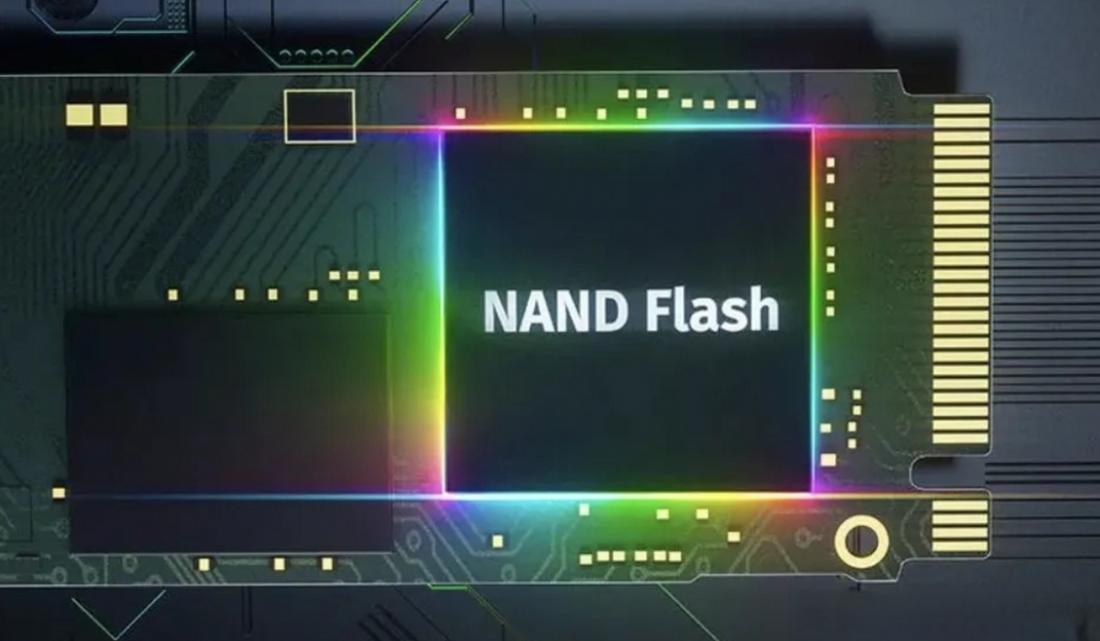
1. TrendForce: Average contract price of NAND Flash is expected to increase by 5% to 10% QoQ in Q3
According to the Associated Press of Finance, according to the latest survey by TrendForce, the NAND Flash market has experienced production cuts and inventory destocking in the first half of 2025, and the supply-demand imbalance has improved significantly. With the transfer of production capacity to high-margin products, the circulating supply of the market has shrunk.
On the demand side, it is supported by enterprises increasing their investment in AI and a large number of shipments of NVIDIA's new generation of Blackwell chips. Looking ahead to the price trend of NAND Flash in the third quarter, the average contract price is expected to increase by 5% to 10% quarter-on-quarter, but the growth rate of eMMC and UFS products is lower due to the uncertain outlook for smartphones in the second half of the year.
2. LPDDR6 memory standard officially released: impact 14.4GHz
According to Fast Technology, JEDEC officially released the LPDDR6 memory standard, specification number JESD209-6, which can significantly improve the performance, energy efficiency, and security of mobile devices and AI applications. In terms of performance, LPDDR6 adopts a two-channel architecture, which allows for more flexible operation while maintaining a minimum access interval of 32 bytes.
However, JEDEC does not stipulate the data transmission rate (frequency) of LPDDR6, and according to previous statements, it can exceed 10Gbps and reach 10,667 Mpbps, and the maximum can be 14,400 Mbps, which can also be said to be 14.4 GHz.
In comparison, LPDDR5 starts at 6,400Mbps and LPDDR5X increases to 8,533Mpbs, while SK hynix's own LPDDR5T can run at 9,600Mbps.
3. Kioxia UFS 4.1 flash memory sample, providing a maximum capacity of 1TB
Kioxia, a major Japanese flash memory manufacturer, has announced that it has begun sampling new UFS Ver. 4.1 embedded flash memory devices designed to meet the needs of next-generation mobile applications, such as advanced smartphones with on-device AI.
Kioxia's UFS Ver. 4.1 device features an innovative BiCS FLASH 3D flash memory and controller integrated in a JEDEC standard package. The 8th generation of BiCS FLASH3D flash memory is used in the new products, and CMOS direct-to-array technology is introduced, which greatly improves energy efficiency, performance, and density. Kioxia's UFS Ver. 4.1 device combines speed and low power consumption to enhance the user experience, enabling faster download speeds and smoother application performance.
4. NXP released the BMx7318/7518 series battery controller chips
NXP has introduced the BMx7318/7518 family, an 18-channel lithium-ion battery cell controller for high-voltage battery management systems for electric vehicles, industrial energy storage systems and 48V battery management systems.
The family is based on NXP's new advanced architecture, with a dedicated ADC for each channel, flexible part number options, and pin-to-pin compatibility between device variants, providing customers with a cost-effective solution while improving overall battery management system performance. The new IC meets automotive ASIL-C and industrial SIL-2 functional safety certifications. The BMx7318/7518 is expected to be available in November 2025.
5. SmartSens launched a new SC326AT of 3MP automotive-grade CMOS image sensor
Recently, SmartSens launched the Automotive Sensor (AT) Series series of 3MP automotive-grade image sensors, a new product SC326AT performance upgrade.
As the first CMOS image sensor in SmartSens' automotive series products to achieve full-process localization, SC326AT is based on SmartSens' CarSens-XR process technology, and adopts a 3.0μm single-pixel and back-illuminated architecture design, which has achieved significant optimization in core performance such as sensitivity, noise suppression, high-temperature imaging stability, and power consumption control.
SC326AT meets the requirements of ISO 26262 ASIL-B automotive functional safety and ISO 21434 automotive cybersecurity, and helps upgrade and transform smart vehicle applications with high reliability and security. SC326AT samples have been accepted and will be mass-produced in Q4 2025.
6. Murata began mass production of the first 0402-inch 47μF MLCC
Murata Manufacturing Co., Ltd. announced that it has started mass production of the industry's first (1) 0402-inch (1.0x0.5 mm) MLCC with a capacitance of 47 μF.
In recent years, the deployment of various devices, including AI servers, has accelerated, and it is necessary to deploy components efficiently on a limited number of boards. To meet these needs, Murata has developed a proprietary ceramic dielectric layer and internal electrical thinning technology to begin mass production of the industry's first breakthrough MLCCs with a size of only 0,402 inches and a maximum capacitance of up to 47μF.
Compared to Murata's previous product (0603 inches), which also has a capacitance value of 47 μF, the mounting area of this product has been reduced by about 60%. Compared to Murata's previous product (22μF), which is also 0402 inches, the capacitance value of this product has been increased by approximately 2.1 times. What's more, because it can be used in a high-temperature environment of up to 105 degrees Celsius, it can be placed close to the chip, which helps to improve the performance of customers' products and devices.
