
- Contact & Inquiry |
- 00852-69498254 |
- English
- pусский
- Deutsch
- English
- 中文(简体)
- 中文(繁体)
- 日本語
1034
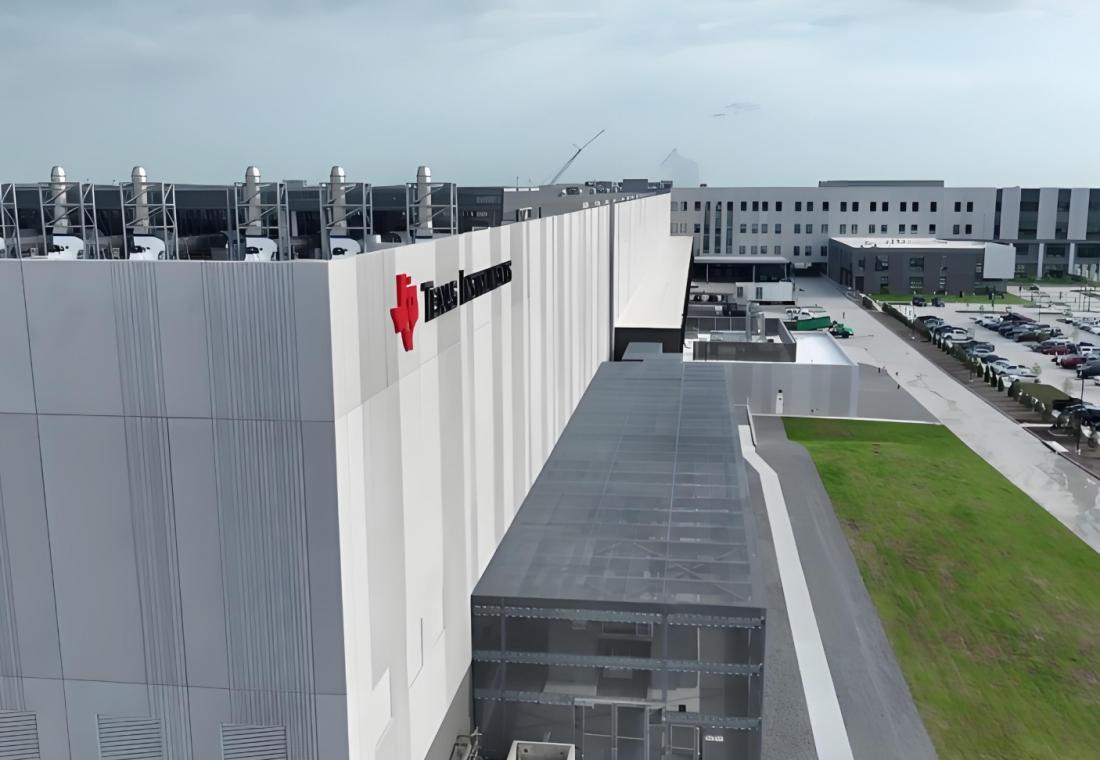
1. Texas Instruments announced a $60 billion investment plan to build seven wafer fabs
Texas Instruments announced on the 18th local time that it plans to invest more than $60 billion in the United States to build seven semiconductor manufacturing plants. The seven factories will be spread across three manufacturing sites in Texas and Utah and are expected to create more than 60,000 U.S. jobs, making them the largest investment in foundational semiconductor manufacturing in U.S. history.
Among them, Texas Instruments' manufacturing base in Sherman, Texas will invest up to $40 billion to build four factories, of which SM1 and SM2 have already begun construction, and SM3 and SM4 will be gradually invested according to future needs. In addition, a second plant in Richardson, Texas, RFAB2 is progressively reaching full production, while LFAB2 in Leahy, Utah, is also under construction.
Haviv Ilan, President and CEO of Texas Instruments, said Texas Instruments is building reliable, low-cost 300mm capacity at scale to deliver analog and embedded processing chips that are critical to virtually all types of electronic systems.
2. Institutions: PC shipments in Chinese mainland increased by 12% year-on-year in the first quarter
According to fast technology news, the latest data from market research agency Canalys shows that in the first quarter of 2025, the PC market in Chinese mainland (excluding tablets) shipped 8.9 million units, a year-on-year increase of 12%; The flat panel market grew even stronger, with 8.7 million units shipped, up 19% year-on-year.
The subsidy policy has effectively stimulated the demand for equipment upgrades in the consumer market and has become the main growth driver. Looking ahead, the PC market in Chinese mainland is expected to be flat in 2025 and grow by 6% in 2026, while the tablet market is expected to grow by 5% this year and contract by 8% in 2026.
Canalys senior analyst said: In the past two years, the PC market pattern in Chinese mainland has changed significantly, and the competition between local brands has become more and more fierce. Chinese consumer-focused players such as iSoftStone, Huawei, Honor, and Xiaomi all saw growth in the first quarter of 2025, further eroding the market share of traditional commercial powerhouses such as Lenovo, HP, and Dell.
3. Marvel introduces the industry's first 2nm custom SRAM, with up to 6Gb capacity
According to IT Home News, Marvell announced the launch of the industry's first 2nm custom SRAM on the 17th local time, which can provide up to 6Gb (768MB) of high-speed on-chip cache for AI xPU computing devices. Marvell claims that its custom 2nm SRAM design delivers 15% area savings and approximately two-thirds less standby power than standard on-chip SRAM, while operating at 3.75GHz.
"Customization is the future of AI infrastructure," said Will Chu, senior vice president and general manager, Custom Cloud Solutions, Marvell. The methodologies and techniques that hyperscalers currently use to develop cutting-edge custom XPUs will gradually permeate more customers, more device classes, and more applications. We look forward to working with our partners and customers to build a leading technology portfolio in the era of customization.
4. Nanxin Technology launched a 190V piezoelectric driver chip to improve the heat dissipation of mobile terminals
Nanxin Technology recently announced the launch of the self-developed 190Vpp piezoelectric micropump liquid cooling driver chip SC3601, which can achieve low-power liquid cooling and heat dissipation in mobile intelligent terminals. The chip achieves a 10-fold increase in power-saving efficiency, with a total harmonic distortion plus noise (THD+N) of the drive waveform as low as 0.3%, and standby power consumption as low as microampere. The liquid cooling solution equipped with this chip can greatly improve the heat dissipation performance of mobile intelligent terminals, filling the gap of domestic technology. At present, SC3601 has been introduced and verified by many customers and will be mass-produced soon.
In addition to the micropump liquid cooling and heat dissipation of computing chips, SC3601 is also suitable for piezoelectric drive applications such as haptic feedback and solid-state buttons, and can achieve low-power consumption and high-precision control in mobile intelligent terminals such as smartphones, tablets, smart wearables, tactile displays, keyboards and mice, etc., and is expected to be extended to industrial and automotive fields in the future.
5. SmartSens launched a 50MP ultra-high dynamic range CMOS sensor for mobile phone applications
Recently, SmartSens, a CMOS image sensor supplier, launched a CMOS image sensor SC595XS for 50 million pixel 1/1.28-inch mobile phone applications.
The product is based on SmartClarity-XL Pro technology, using 22nm Stack advanced process, innovatively equipped with SmartPixGain HDR (single exposure three-frame fusion), SFCPixel-2 and AllPix ADAF and other advantageous technologies, with 110dB ultra-high dynamic range, and has a number of performance advantages such as low noise, high frame rate, low power consumption, 100% full pixel focusing, etc. It can give the flagship smartphone's main camera vivid light and shadow, excellent image quality, professional-grade image capabilities, and significantly improve the mobile phone's high-dynamic video shooting effect. SC595XS will accept samples in Q3 2025.
6. Guoxin Technology: The internal test of the new product of anti-quantum cipher card was successful
According to the Science and Technology Innovation Board Daily, Guoxin Technology announced that the new product of anti-quantum cryptographic card developed by the company has been successfully tested in CCUPHPQ01 company recently.
The anti-quantum cryptographic card CCUPHPQ01 developed by the company is a high-performance cryptographic security product based on the combination of anti-quantum cryptographic algorithm and classical national cryptography algorithm, with the company's self-designed and developed CCP1080T security chip as the main control chip, plus a domestic FPGA chip.
At present, the company has sent samples to a number of customers, and many customers have been developing information security products based on the new product CCUPHPQ01 anti-quantum cryptographic card.
7. Aiwei Electronics: independent ultra-low power consumption and high pressure liquid cooling drive products are about to be mass-produced
According to the Science and Technology Innovation Board Daily, Aiwei Electronic announced that the company's self-developed ultra-low-power and high-voltage 180Vpp piezoelectric micropump liquid-cooled drive products have completed verification tests by many customers, and it is planned to achieve mass production in the fourth quarter of 2025.
The product is developed based on the inverse effect of piezoelectric ceramics, with the characteristics of ultra-low power consumption, ultra-small size, ultra-high back pressure flow and ultra-quiet heat dissipation, suitable for mobile phones, PCs, AI glasses and other equipment, filling the domestic gap, and is expected to open up new performance growth points for the company in the fields of consumer electronics and industrial interconnection. However, it takes a long time for new products to be introduced to customers, and there is uncertainty in mass sales, and there is a risk that marketing and customer development are not as expected.
8. NXP announced the completion of the acquisition of TTTech Auto
NXP, a leading automotive chip manufacturer, has announced the completion of the acquisition of TTTech Auto, an innovator in safety-critical systems and middleware for software-defined vehicles (SDVs). The acquisition further strengthens NXP's leadership position in high-performance mixed-signal solutions to drive the development of safe and sustainable vehicle electrification, autonomous driving and connected services, and accelerate the automotive industry's transition to software-defined vehicles
TTTech Auto's MotionWise security middleware, combined with NXP's CoreRide platform, can help automakers overcome barriers to software and hardware integration, reduce complexity, improve development efficiency, and increase scalability and cost-effectiveness. TTTech Auto will continue to operate in an open industry ecosystem and remain neutral, supporting a wide range of SoC manufacturers, OEMs, and third-party software partners to drive SDV.
